
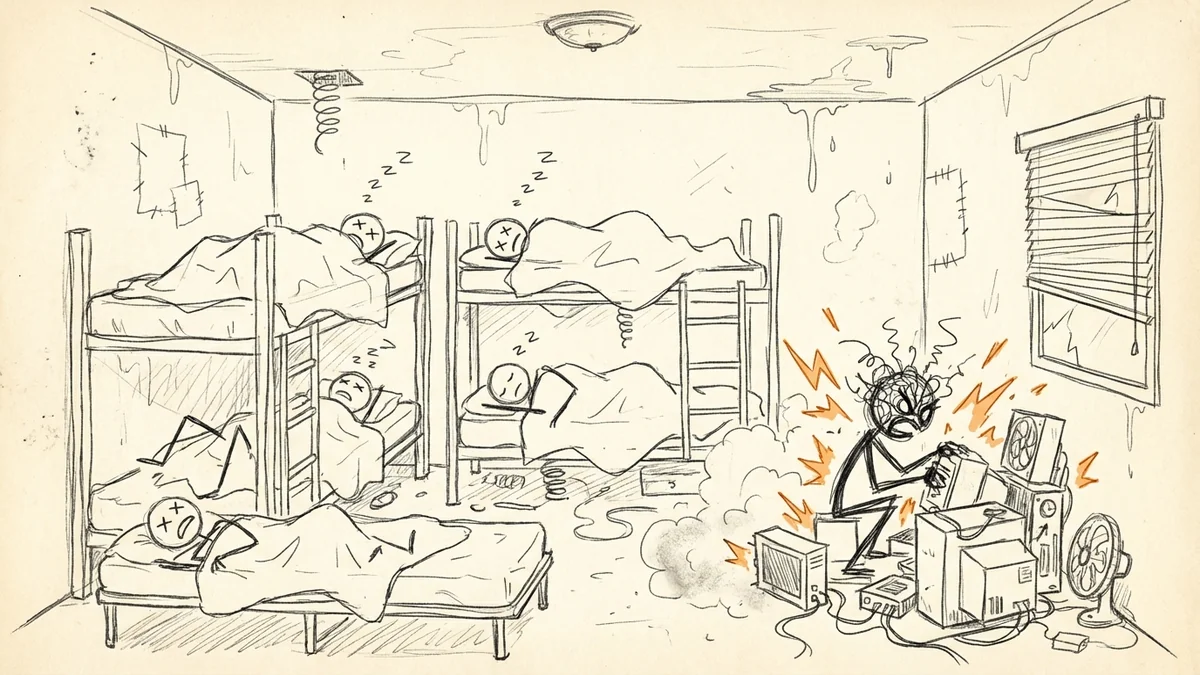

So here's the thing about shared hosting: it's like staying at a sketchy motel.
Cheap? Absolutely. You're looking at $2-15 a month. But you're sharing walls with whoever else walks in. Could be a quiet family on vacation. Could be someone running a cryptocurrency mining operation that keeps the whole building awake.
If you're a small business owner on the Central Coast getting ready for summer tourist season, this matters more than you might think.
What "Shared Hosting" Actually Means
When you pay $5/month for web hosting, your website lives on the same physical server as hundreds, sometimes thousands, of other websites. You're all sharing the same computer's processing power, memory, and bandwidth.
This is fine... until it isn't.
About 70% of WordPress websites run on shared hosting. Most of them are small sites with light traffic. For a lot of businesses, shared hosting works perfectly fine for years.
But when summer hits and your retail shop suddenly gets three times the traffic from tourists searching "wine tasting near me" or "best surf shops in Pismo"? That's when shared hosting shows its true colors.
The "Noisy Neighbor" Problem
Remember the motel analogy? Here's where it gets real.
On shared hosting, if another website on your server gets a sudden traffic spike, or gets hacked, or runs poorly-coded software, your site slows down too. It's like someone in the next room throwing a party at 2 AM. You didn't invite anyone, but you're definitely not sleeping.
The technical term is "resource contention." The real-world term is "why is my website so slow right now?"

Why Slow Matters More Than You Think
Here's where the numbers get uncomfortable:
- 53% of mobile visitors leave if your site takes longer than 3 seconds to load. More than half. Gone.
- The chance of someone bouncing increases 32% as load time goes from 1 second to 3 seconds.
- At 4 seconds? Bounce rate jumps to 24%. At 5 seconds, it's 38%.
And here's the kicker: fast sites convert at 2.5 to 3 times the rate of slow ones. A site that loads in 1 second converts three times better than one that loads in 5 seconds.
Think about what that means during tourist season. Every slow page load is a customer walking out of your store before they even look around.

The Security Side of Sketchy
Speed is one thing. Security is another.
On shared hosting, you're not just sharing resources. You're sharing an IP address with potentially hundreds of other websites. If one of those sites gets hacked or starts sending spam, your site's IP can end up on blacklists. Your emails start going to spam. Google gets suspicious of your address.
The numbers here are sobering: 32% of businesses have had data breaches because of poor hosting security. Not because they did anything wrong, but because their hosting environment wasn't secure enough.
And if you're running WordPress (most small business sites do), those plugin vulnerabilities everyone warns about? They're worse when you're on shared hosting because one vulnerable site can become a doorway to others.

The Real Cost of "Cheap"
Let's do some math.
Businesses lose an average of 5 hours per month to website downtime. If your site is your primary way of getting new customers, what does 5 hours of being invisible cost you?
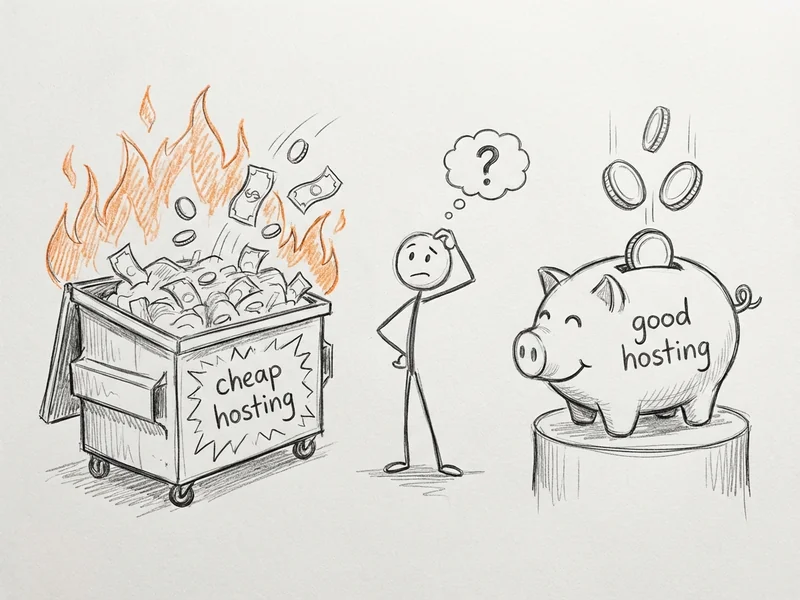
One in five businesses loses more than $2,500 per month from hosting-related downtime. That's $30,000 a year to save $100 on hosting.
This isn't about premium vs. cheap. It's about math.
What's the Alternative?
There are a few steps up from shared hosting:
Managed hosting ($10-50/month): Someone else handles the technical stuff. Updates, security patches, backups. Your site gets more dedicated resources. Think of it as a decent hotel instead of a motel. You still have neighbors, but there's actual management keeping things running.
VPS (Virtual Private Server) ($20-100/month): Your own dedicated slice of a server. Like renting an apartment instead of a room. You're still in a building with others, but you have your own walls, your own kitchen, your own space.
Dedicated hosting ($100+/month): Your own server. For most small businesses, this is overkill. It's like buying a house when you need an apartment.
For most small businesses on the Central Coast, managed hosting in the $20-50/month range hits the sweet spot. Fast enough to handle tourist season traffic spikes, secure enough to not worry, affordable enough to make sense.
When Shared Hosting Is Actually Fine
I'm not going to tell you shared hosting is always bad. That's not true.
If you have a simple site with your business hours and contact info, and you get a few hundred visitors a month, shared hosting might work fine for years. If your website isn't your primary revenue driver, the risk/reward math changes.
But if:
- Your site is how most customers find you
- You run an online store (even a small one)
- You're in a seasonal business where traffic spikes matter
- Your reputation depends on looking professional online
Then $30-50/month for better hosting is one of the best investments you can make.
What YouGrow Does Differently
Every YouGrow site runs on managed hosting with dedicated resources. No noisy neighbors. No shared IP addresses. Automatic backups every day. Security patches applied without you having to think about it.
It's built into the YouGrow service. No surprise hosting bills, no "your site got hacked because of the casino site next door" phone calls.
If you're curious what your current hosting situation looks like, I'm happy to take a look. Free, no pitch. Sometimes the answer is "you're fine." Sometimes it's "let's talk before tourist season starts."