


You have an idea for an app. Maybe it solves a problem you deal with every day. Maybe you've watched competitors fumble with clunky tools and thought "I could do this better." Maybe customers keep asking for something that doesn't exist yet.
That instinct is valuable. Most successful software starts exactly where you are—with someone who understands a problem deeply.
But here's what the tech industry doesn't make clear: writing the code is only one piece of the puzzle. I've seen great ideas struggle because nobody planned for what comes after the build. And I've seen simpler ideas succeed because the fundamentals were solid.
This isn't meant to discourage you. It's meant to prepare you. The more you understand going in, the better decisions you can make.
The Three Things That Actually Matter
Successful apps aren't just well-built. They nail three things:
1. Product-Market Fit
Does this solve a real problem that people will pay real money to fix?
"People" isn't everyone—it's a specific group you can identify and reach. The tighter you can define who this is for and what pain it eliminates, the better your chances.
"Everyone who gets divorced" is too broad. "California paralegals who prepare 50+ divorce cases a year" is something you can actually build for and sell to.
This matters more than the technology. 34% of startups fail specifically because they built something the market didn't actually need. And 56% cite marketing problems as their primary cause of failure—which usually means they couldn't find or reach the people who'd pay for what they built.

2. Distribution
How will people find out your app exists?
This is where most ideas die. The App Store has millions of apps—being listed isn't a marketing strategy. Do you have an existing audience, customer base, or professional network? Can you reach your target users through specific channels?
The best distribution is often something you already have: your current clients, your industry contacts, your reputation in a niche. If you're already the person people call for advice in your field, you have distribution. If you're starting from zero, budget accordingly.
3. Sustainability
An app isn't a one-time purchase like a car. It's more like a restaurant—there are ongoing costs whether or not customers show up.
Servers. Updates. Security patches. Customer support. Bug fixes. Changes when laws or platforms update.
You need a plan for how the app pays for itself over time, not just how to fund the initial build.
The Funding Question
There's a myth that you need venture capital to build software. You don't.
Here's the thing: only 0.9% of startups in the US secure venture capital funding. That means bootstrapping isn't the backup plan—it's the default path for 99% of software projects.
And the counterintuitive part? Bootstrapped startups have a 35-40% five-year survival rate compared to just 10-15% for VC-funded companies. They're also 2-3x more likely to actually turn a profit.
Why? Because 75% of venture-backed startups fail. VC money creates pressure for hypergrowth, which leads to premature scaling, which leads to burning through cash before you've figured out what customers actually want.
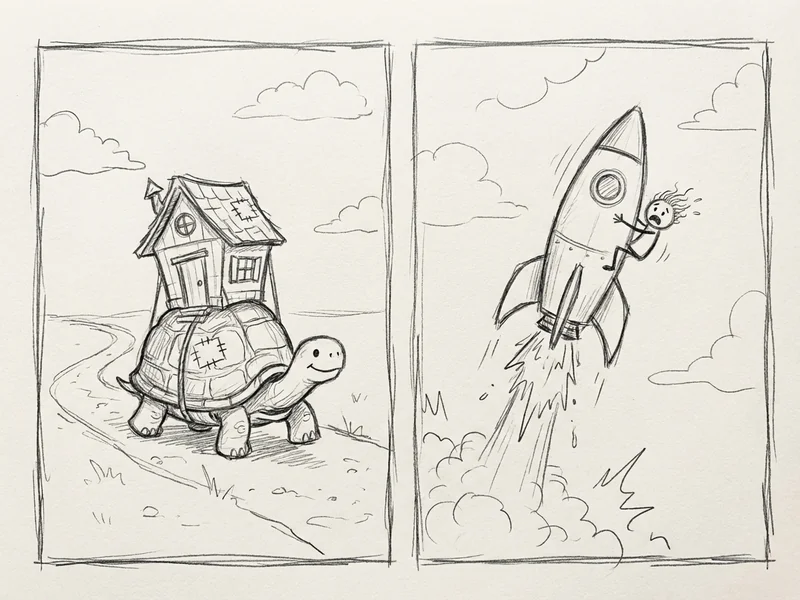
Here's a quick comparison:
| Path | Best For | Reality Check |
|---|---|---|
| Bootstrap | Existing businesses adding a tool, niche B2B products | You keep full control. Slower growth, but sustainable and yours. |
| SBA / Bank Loan | Established businesses with revenue history | Debt, not equity. You pay it back, but you own everything. |
| Angel Investors | Early-stage with a working prototype and some traction | They want equity. Usually $25K-$500K. Expect to give up 5-20%. |
| Venture Capital | Hypergrowth plays aiming for $100M+ exits | Rarely right for niche tools. They need 10x returns. |
For most small business apps, bootstrapping or a small loan makes more sense than chasing investors. Investors want a return—that means either explosive growth or an exit (selling the company). If you want to build a sustainable tool for your industry that pays for itself, you probably don't need or want VC money.
What Things Actually Cost
Ballpark figures to help you plan. Every project is different, but this gives you a realistic starting point.
Initial Build (MVP—Minimum Viable Product)
- Simple app (form-based, single platform): $10,000 - $25,000
- Medium complexity (user accounts, integrations, custom logic): $25,000 - $75,000
- Complex platform (multiple user types, payments, AI features): $75,000 - $150,000+
Yes, AI tools have made development faster and cheaper than it was two years ago. But they haven't eliminated the core costs of understanding the problem, designing the solution, and building something that actually works.
Ongoing Costs (Monthly)
This is the part people forget to budget for:
- Hosting & infrastructure: $50 - $500+ (depends on users and data)
- Third-party services (payments, email, etc.): $100 - $500
- Maintenance & updates: $500 - $2,000+ (or budget 15-20% of build cost annually)
- Support: Your time, or hire someone
The Industry Rule of Thumb
Budget 15-20% of your initial build cost per year for maintenance. A $50K app needs roughly $7,500-$10,000/year to keep running and updated.
This isn't optional—software that isn't maintained becomes a security risk and stops working as platforms evolve.
Here's the kicker: maintenance typically accounts for 50-80% of the total cost of ownership over the software's lifetime. Development happens once. Maintenance continues forever.

What Makes a Strong Starting Point
You don't need all of these, but the more you have, the better your odds:
- Domain expertise. You deeply understand the problem because you live it. This is worth more than most people realize.
- Existing customers or audience. People who already trust you and would try what you build.
- A specific, reachable niche. "Divorce attorneys in California" beats "people getting divorced."
- Revenue model clarity. You know how this makes money (subscription, per-use, licensing, etc.).
- Willingness to start small. The best v1 solves one problem really well. Features can come later.
- Time to be involved. Building software is collaborative. You'll need to provide input throughout.
That last one trips people up. You can't just hand off a napkin sketch and expect a working app six weeks later. Good software requires ongoing feedback, decisions, and testing. Budget your time accordingly.
The Failure Stats Nobody Likes to Discuss
I'm not sharing these to scare you. I'm sharing them so you go in with eyes open:
- 90% of startups fail at some point in their lifecycle.
- 82% of business failures in 2023 were due to cash flow problems—which is why ongoing costs matter so much.
- Projects with documented requirements were 50% more likely to succeed than those that just "figured it out as they went."
The good news? These are problems you can plan for. Know your market before you build. Budget for ongoing costs. Document what you're building and why.
The businesses that succeed aren't necessarily the ones with the best technology. They're the ones that understood the fundamentals before they wrote a line of code.

Coming to the Conversation Prepared
If you decide to talk to someone about building your idea, you'll have a more productive conversation if you've thought through:
- Who specifically is this for? Not "everyone who could use it"—your ideal first 10 customers.
- What problem does it solve? Be specific. What's painful, slow, expensive, or impossible right now?
- How do people solve this today? Competitors, workarounds, doing nothing—what's the current reality?
- How will people find it? Your existing network, industry channels, marketing budget?
- What's your budget range? Helps right-size the approach. There's no wrong answer, just tradeoffs.
- What does success look like in year one? Revenue? Users? Efficiency gains? Knowing this shapes everything.
You don't need perfect answers. But having thought about these questions separates the "I have a vague idea" conversations from the "let's actually figure out if this makes sense" conversations.
The Bottom Line
Building an app is a real investment—of money, time, and energy. But it's not magic, and it's not only for tech companies with millions in funding.
Small businesses build successful software tools all the time, especially when they understand their customers deeply and start with a focused solution.
The questions to ask yourself:
- Do I understand the problem well enough to define who has it and how bad it hurts?
- Do I have a way to reach those people?
- Can I sustain this financially beyond the initial build?
- Am I willing to start small and iterate?
If you can answer yes to most of those, you're in a better position than the majority of people who attempt this.
If you want to talk through your specific idea—whether it makes sense, what it might cost, what approach might work—reach out. I'll tell you honestly if it seems viable or if there are red flags to address first.