
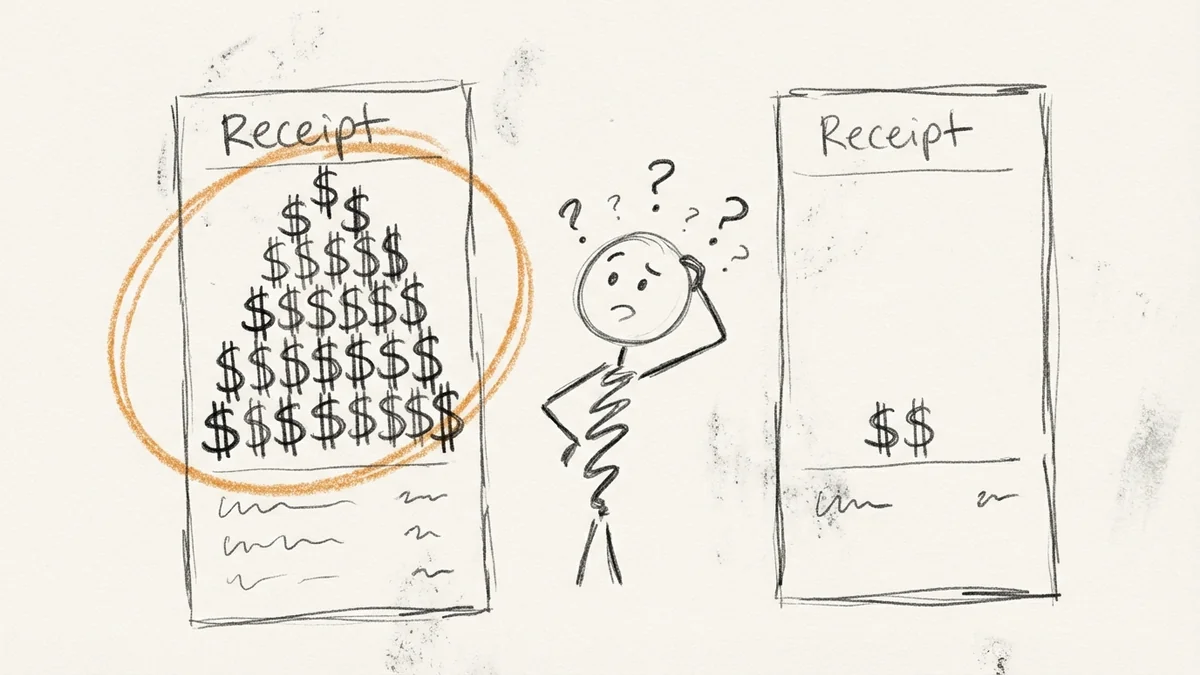

Last year, a contractor came to me with a quote from a development shop: $48,000 for a scheduling app that would let his crews log jobs and track hours. Basic stuff—forms, a database, maybe some reports.
I told him to wait.
Six months later, we built something similar for under $5,000. Same functionality. Actually better, because we could iterate faster.
What changed? The economics of writing software flipped in 2025, and most people getting quotes haven't figured that out yet.
The Old Math (Still What Most Shops Quote)
Here's how custom software pricing has worked for decades:
A developer in the US costs $100-200 per hour. A typical MVP (minimum viable product—the simplest version that actually works) takes 500-1,500 hours to build. Do the math, and you get the industry standard pricing: $50,000-$100,000 for a basic MVP.
That's where most quotes still come from. Development shops are using 2023 estimates in a 2026 world.
There's nothing scammy about it—those were accurate numbers. But the ground shifted.
What Actually Changed
In 2024, AI coding assistants went from "neat autocomplete" to "writes entire features." By mid-2025, the numbers got weird.
41% of all code being written today is AI-generated or AI-assisted. Not some experimental corner of the industry—nearly half of everything.
GitHub Copilot now contributes 46% of all code for its active users. That's up from 27% when it launched in 2022. The tool literally writes almost half the code.
Developers using AI tools save 30-60% of their time on coding, debugging, and documentation. Some studies show 51% faster completion times for certain types of work.
So if developers are twice as fast, why aren't quotes half the price?
Mostly because the market hasn't caught up. Agencies still quote based on historical project costs. Freelancers still charge hourly rates calculated before this shift. The old pricing is baked into everyone's expectations.

The Ralph Wiggum Technique (Not a Joke)
Here's where it gets interesting.
A developer named Geoffrey Huntley published something called the "Ralph Wiggum technique" in late 2024. Named after the Simpsons character who's always confused but never stops trying.
The core idea: set up AI coding tools to run in loops, iterating on their own work until they solve the problem. The AI sees its previous output, notices what's broken, and fixes it. Repeat until done.
Huntley shared a real example: a $50,000 contract delivered for $297 in API costs. An MVP, tested and reviewed.
Is that an extreme case? Absolutely. Cherry-picked success story? Probably. But even if the real improvement is 5x instead of 100x, that still means a $50,000 project becomes a $10,000 project.
The technique spread through Y Combinator hackathons, where teams started shipping entire applications overnight for a few hundred dollars in API costs.
What This Actually Means for You
If you got a custom software quote in 2024, it's probably out of date.
Not "slightly high"—potentially way off.
Here's what to do:
1. Ask for an Updated Quote
Specifically ask: "Are you using AI-assisted development? How does that affect the timeline and cost?"
If they look at you blankly, they might not be keeping up. 76% of professional developers are either using AI coding tools or planning to adopt them. If your developer isn't in that group, ask why.
2. Consider Smaller Scope
The old wisdom was "build the MVP as small as possible because development is expensive." That's still true, but now "small" can actually solve real problems.
That scheduling app for the contractor? In 2024, the minimum viable version would've been a stripped-down web form. In 2026, we built native mobile apps with offline support for the same budget.
3. Expect Faster Iteration
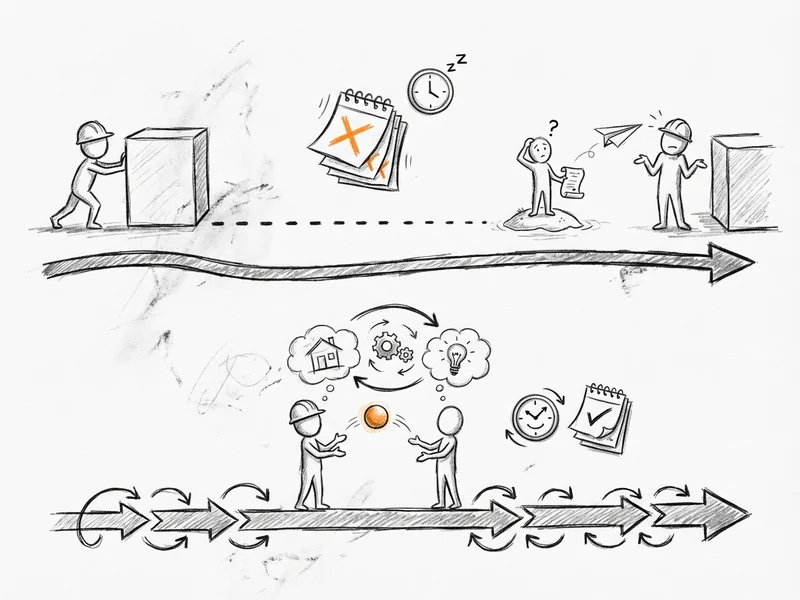
The biggest change isn't just cheaper initial builds—it's how fast you can revise. When AI handles the grunt work, changes that used to take weeks take days.
"Can we add a field to track fuel costs?" used to be a change order. Now it's a conversation.
The Caveats (Because There Are Always Caveats)
I'm not saying all software is now cheap. A few things to keep in mind:
AI Helps Most on Greenfield Projects
"Greenfield" means building something new from scratch. AI coding tools are fantastic at this.
Legacy systems—the kind with ten years of accumulated complexity and undocumented edge cases—are harder. AI can help, but the savings aren't as dramatic.
Complexity Still Costs
If you need real-time sync between thousands of users, complex financial calculations, or integrations with obscure enterprise systems, that's still expensive. AI makes the easy parts easier, but the hard parts stay hard.
Maintenance Still Costs
This part hasn't changed: maintenance typically runs 15-20% of the initial build cost per year. A $10,000 app needs $1,500-2,000/year to keep running and updated.
AI makes building faster, but software still needs care.
Expertise Still Matters
AI doesn't replace knowing what to build. The contractor's scheduling app needed someone who understood construction workflows, not just someone who could write code.
The expensive part of software was never typing—it was understanding the problem. That hasn't changed.
How to Spot Outdated Pricing
A few red flags that a quote might be using pre-AI assumptions:
- Hours-based estimates without tool discussion. "This will take 800 hours at $100/hour" without mentioning how AI changes that calculation.
- Timelines measured in months for simple features. A basic CRUD app (create, read, update, delete—the foundation of most business tools) shouldn't take 4 months anymore.
- No mention of AI or modern tooling. If the proposal reads like it could've been written in 2020, ask questions.
- Fixed scope, fixed price, no iteration. The waterfall model made sense when changes were expensive. Now they're cheap. Flexible approaches make more sense.
None of these are automatic disqualifiers—but they're worth asking about.
The Bottom Line
Custom software got dramatically cheaper in 2025, but the pricing hasn't caught up everywhere.
If you've been sitting on an idea because the quotes felt unrealistic, it might be time to ask again. If you got a quote last year, get an updated one.
The $50,000 project might be $10,000 now. The "too expensive to build" tool might be within reach.
What hasn't changed: you still need to understand your problem clearly, know who you're building for, and plan for ongoing costs. (If you haven't read it yet, my companion piece on what nobody tells you before building an app covers the fundamentals.)
But the economics? Those shifted. And if your quotes don't reflect that, you might be overpaying.