

If you've been following AI news, you've probably seen the Gemini 2.0 announcement fly by. Google released it on December 11, 2024, and it sounds like another version number bump. Gemini 1.5 to 2.0. So what?
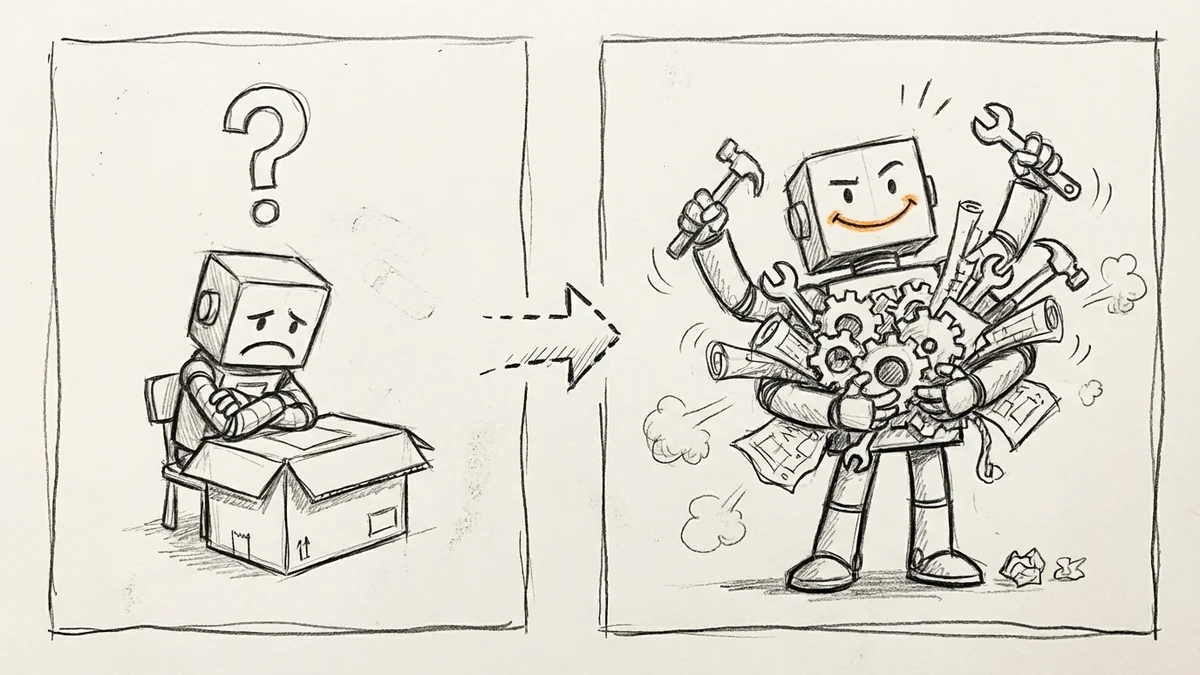
Here's the thing: the version number isn't the story. The story is that AI is shifting from "answer my questions" to "go do this for me." And that changes everything.
The Difference Between a Chatbot and an Agent
Think about how you've probably used ChatGPT or the old Gemini. You ask a question, it gives you an answer. You ask it to write something, it writes something. It's like having a really smart research assistant who can only talk – never actually do anything.
Other AI models follow the same pattern—mostly answering questions instead of taking actions.
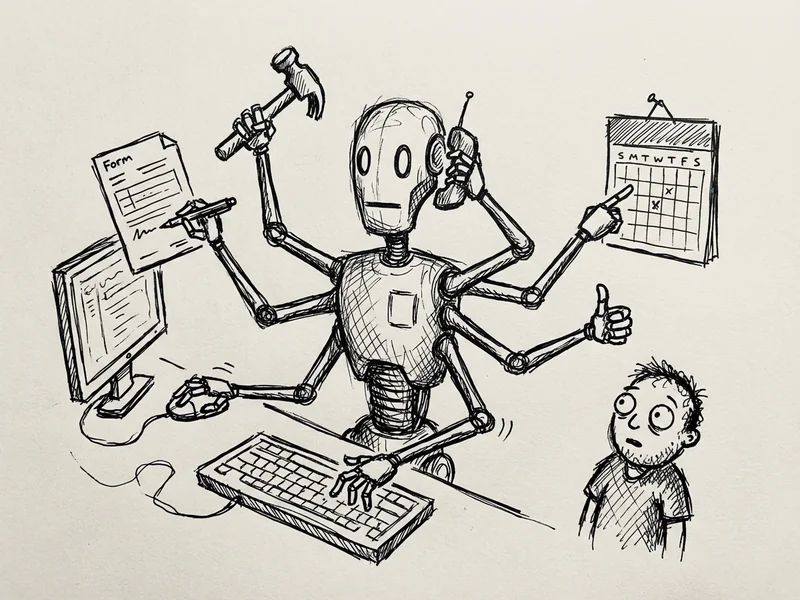
An AI agent is different. Instead of just answering questions, it can take actions. Browse the web. Click buttons. Fill out forms. Book appointments. Actually complete tasks, not just explain how to complete them.
Here's a simple way to think about it:
- Chatbot: "What's on my calendar tomorrow?"
- Agent: "Reschedule anything before noon to the afternoon."
See the difference? The first one gives you information. The second one does something with that information.
What Gemini 2.0 Actually Does
Google built Gemini 2.0 specifically for this "agentic era" – their words. The new model outperforms the previous version while running twice as fast, but the speed isn't the point.
The point is what it can do:
- Native tool use – It can automatically use Google Search, run code, and call other tools without you telling it exactly how.
- Multimodal input AND output – It understands images, video, and audio, and can create them too. Not just text in, text out.
- Multi-step reasoning – It can plan ahead, break down complex tasks, and figure out how to accomplish goals.
Google also announced some prototype projects that show where this is heading. Project Astra is an AI assistant you can have a real-time conversation with – using your phone camera, it can see what you're looking at and help in the moment. Project Mariner is a Chrome extension that can actually use your web browser for you, clicking through pages and completing tasks.
Why This Matters for Small Businesses
Google says their AI Overviews now reach 1 billion people. AI isn't experimental anymore. It's becoming the default way millions of people get information and get things done.
The businesses that learn to work with AI agents will have a real advantage. Research shows that people using AI tools are 66% more productive on average. That's not a small bump. That's the difference between drowning in tasks and having time to actually grow your business.
And this is still early. 80% of business automation leaders say they're accelerating AI agent investments this year. By 2028, a third of business software is expected to have AI agent capabilities built in – up from almost nothing today.
I've been building software and automations for over a decade, and this pattern—new tech that starts confusing and becomes standard—keeps repeating. The question isn't whether AI agents will matter. It's whether you'll be comfortable using them when they do.
What You Can Do Right Now
Most of Gemini 2.0's flashiest features are still in "experimental" or "trusted tester" mode. You can't just go download Project Mariner today and have it browse the web for you.
But here's what you can do:
- Try the free Gemini 2.0 Flash (just like GPT-4o went free) – It's available now at gemini.google.com. Select "2.0 Flash Experimental" from the model dropdown. Play with it. Ask it to help with something you're actually working on.
- Start thinking in tasks, not questions – Instead of asking "what should I post on social media," try "create 5 social media posts about [your topic] with different angles." Instead of "how do I write a follow-up email," try "write a follow-up email to a client who hasn't responded in a week." Get specific.
- Pay attention to the tools you use – Your accounting software, your scheduling app, your email – all of these will probably have AI agent features within a year or two. When they do, you'll want to be comfortable with the concept.

The Honest Assessment
Is Gemini 2.0 going to transform your business today? No. Most of the agent capabilities are still prototypes.
Will AI agents transform how small businesses operate in the next few years? Almost certainly yes.
The shift from chatbots to agents is like the shift from search engines to smartphones. Search engines let you find information. Smartphones let you act on it – anywhere, anytime. AI agents are the next version of that same evolution.
You don't need to rush out and pay for expensive AI subscriptions. But you should probably start getting comfortable with the idea that soon, instead of asking "what should I do?" you'll be saying "go do this."
Need Help Making Sense of AI?
I track these AI developments so you don't have to sift through the hype. When something is genuinely useful for small businesses on the Central Coast, I'll tell you. When it's just tech companies trying to sound impressive, I'll tell you that too.
If you're wondering how AI might actually help your specific situation—or you're just overwhelmed by all the announcements—let's talk. No jargon, no pressure. Just practical advice about what's worth your time right now.