


A few years ago, someone searching for help with their kitchen would type "contractor near me" into Google. Today? They're searching for "contractor specializing in 1950s ranch kitchen remodels Arroyo Grande."
This isn't an exaggeration. It's what I see every week when talking with local business owners on the Central Coast. The customers showing up at their doors have done their homework. They've read reviews. They've watched YouTube videos. They've scrolled through Instagram posts. And by the time they reach out, they know exactly what they want.
The question is: are you the one they're looking for?
The Death of "Near Me"
Here's something that surprised me: generic "near me" searches are actually down 19% since 2021.
Wait, what? Aren't local searches growing?
Yes, they are. 46% of all Google searches have local intent. But here's the twist: people aren't searching "plumber near me" anymore. They're searching "tankless water heater installation Paso Robles" or "emergency drain unclogging San Luis Obispo 24 hours."
The searches got specific. Hyper-specific.
This shift makes sense when you think about it. When everyone can search anything, the competitive advantage shifts to the person who can find exactly what they need. And "near me" doesn't cut it anymore when you can type out your entire problem in natural language and expect Google to understand.
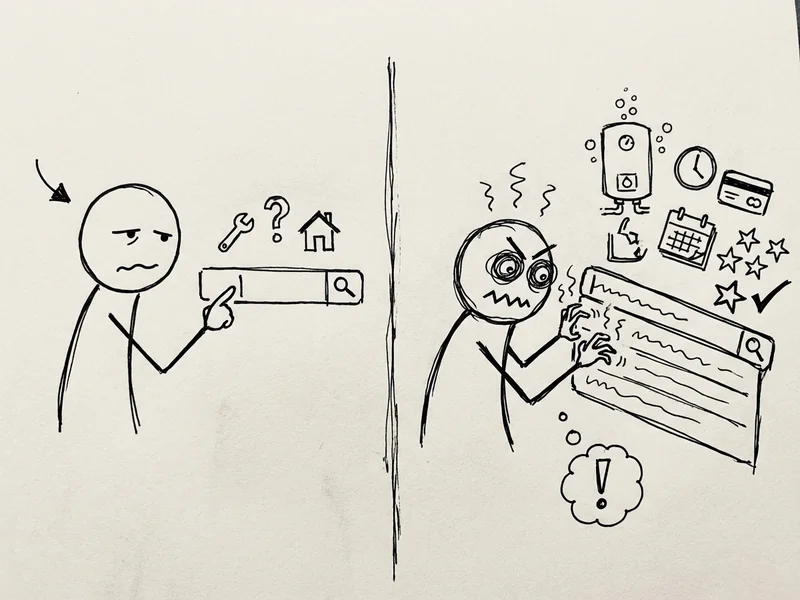
Why Customers Are Getting Pickier
There are a few forces driving this:
1. Information abundance: Your potential customers have access to more information than ever. BrightLocal's 2025 research backs this up—consumers want detailed reviews with photos and videos, up 7% from last year. They're not just reading star ratings. They're looking at project photos, watching walkthroughs, and reading specifics about whether the work matches their particular situation.
2. Higher stakes: 68% of consumers are seeking expert advice on high-value purchases. When you're spending $30,000 on a kitchen remodel or $5,000 on a landscaping project, you don't want someone who "does a little bit of everything." You want someone who has done your exact thing a hundred times.
3. Amazon killed the generalist advantage for products: Academic research from UT Dallas puts it bluntly: as online retail grows, the optimal strategy for physical businesses shifts from generalist to specialist. You can't out-Amazon Amazon. But you can out-specialize them.
What Central Coast Customers Actually Value
Here's the good news for local businesses: customers want to hire local specialists. They're not just tolerating it—they prefer it.
96% of consumers rate local businesses as providing more personalized service than chains or national competitors. That's not a typo. Ninety-six percent.
And they're willing to pay for it. 72% of people say they'll pay more for the quality service they expect from a local business.
When people choose local businesses over chains, here's what they're looking for:
- 36% cite personalized customer service
- 34% cite high-quality craftsmanship
- 56% want locally-made products
Notice what's not on that list? Price. Convenience. Selection.
Those are what people value about chains. When they come to you, they're looking for something different: expertise, quality, and the feeling that you actually understand their specific situation.
What This Looks Like in SLO County
Let me paint a picture of what "hyper-specific" means on the Central Coast:
The tourist economy: A restaurant in Cayucos isn't competing for "best restaurant near me." They're competing for "casual seafood with ocean view dog-friendly Cayucos." That's a much more winnable search.
The wine country effect: A contractor in Paso Robles isn't just doing home remodels. They're doing "wine barrel room conversions" and "tasting room build-outs" because that's what the local economy needs. And that's what they can become known for.
The mid-century gold: Arroyo Grande, Morro Bay, and SLO have a surprising number of mid-century modern homes. A contractor who becomes the name for mid-century restoration doesn't need to compete on price with the guy who "does everything."
The coastal premium: Salt air destroys things differently. A painter who understands coastal paint systems, or a landscaper who knows which plants survive the fog, has specialized knowledge that mainlanders don't.
How to Position Your Business for Specific Searches
So how do you actually capture these hyper-specific customers? Here's what works:
1. Pick your lane (and own it publicly). You probably already have a specialty—you just haven't told anyone. Look at your last 20 projects. Is there a pattern? Do you keep getting referred for the same type of work? That's your niche. Put it on your website, in your Google Business Profile, and in every conversation.
2. Show specific work, not generic portfolios. A gallery of "kitchens we've done" is nice. A gallery of "farmhouse kitchens in Templeton homes" is better. Customers want to see that you've solved their problem before, not that you've solved some general version of it.
3. Let reviews do the heavy lifting. When someone leaves a review, encourage them to be specific. "They did a great job on our Victorian in SLO" is worth ten times more than "Great work, would recommend." Specific reviews show up in specific searches.
4. Write content that answers specific questions. Blog posts like "What to know before remodeling a 1960s ranch house in Arroyo Grande" will rank for searches you could never buy ads for. They position you as the local expert before anyone even picks up the phone. (I wrote more about what actually moves the needle for local SEO if you want to dig deeper.)
5. Double down on what makes you local. You know the permit process in SLO County. You know which inspectors are reasonable. You know the building codes for coastal zones. These aren't just conveniences—they're expertise that out-of-town competitors can't match.
The Specialist Premium
Here's the math that matters: specialists can charge more.
When you're the only game in town for a specific type of work, you're not competing on price. You're competing on capability. And capability commands a premium.
Think about it from the customer's perspective. They're spending $50,000 on a project. Is saving $2,000 by hiring a generalist worth the risk that they don't understand the specific challenges of your situation?
For most people, the answer is no. They want confidence that the job will be done right. And that confidence comes from hiring someone who's done their exact thing before.
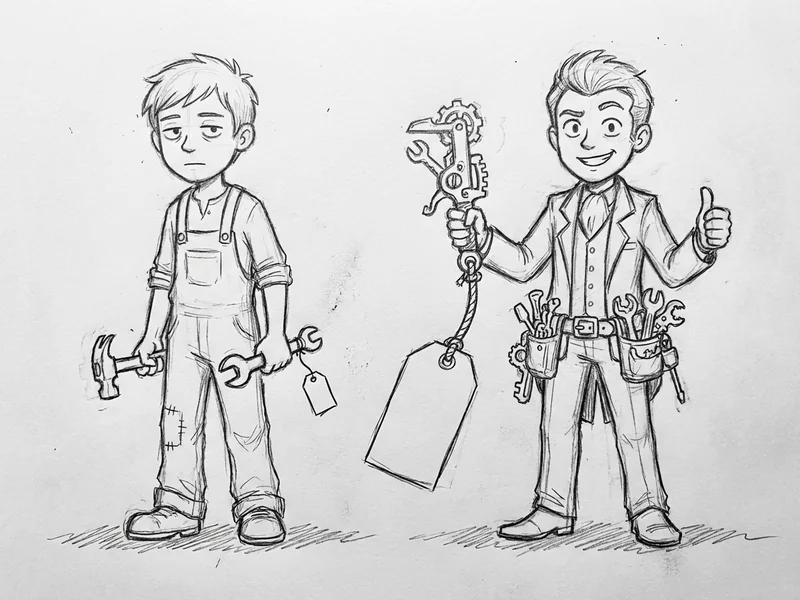
Where This Is Heading
The trend toward specificity isn't slowing down. If anything, AI is accelerating it. As search engines get better at understanding natural language, people will search in even more specific ways. Voice search makes this even more dramatic—nobody says "plumber near me" to Siri. They say "find me a plumber who can fix a leaking tankless water heater this weekend."
The businesses that win in 2025 and beyond won't be the ones trying to be everything to everyone. They'll be the ones who are obviously the right choice for a specific type of customer.
On the Central Coast, that means understanding what makes our local economy different—the wine industry, the tourism, the coastal challenges, the architectural history—and becoming known for solving those specific problems.
People don't want "a contractor." They want their contractor. The one who gets it. The one who's done it before. The one who's obviously the right call.
The question is: are you positioning yourself to be that obvious choice?
If you're not sure where to start—or you want a second opinion on how your business shows up online—drop me a line. I'm happy to take a quick look and point you in the right direction.