
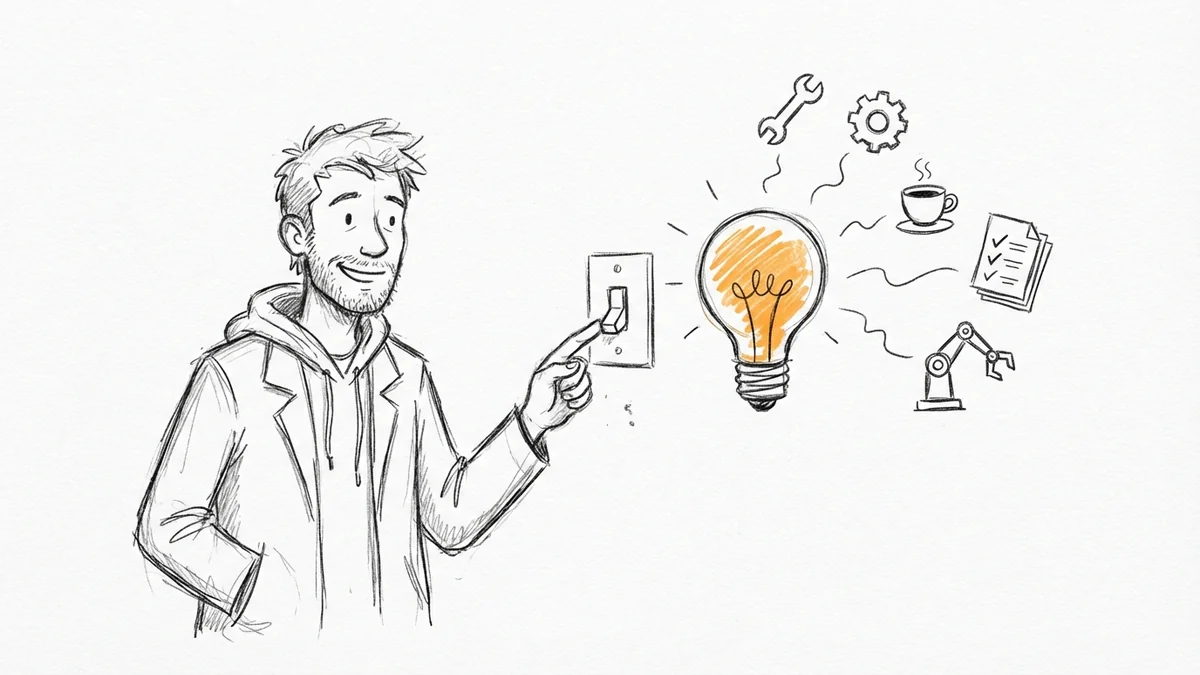

A year ago, when I talked to local business owners about AI, the conversation started with "should I?" Now it starts with "which one?"
That shift happened faster than anyone expected. AI adoption among small businesses jumped from 39% in 2024 to 55% in 2025 - a 41% increase in a single year. And by September, over 90% of small businesses reported using at least one AI tool.
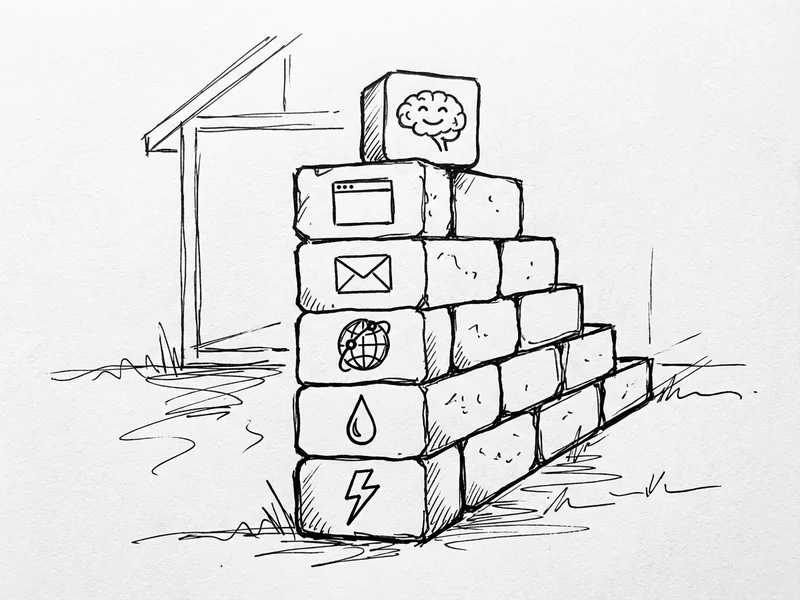
2025 was the year AI stopped being a shiny toy and became infrastructure. Like email. Like having a website. Like accepting credit cards. You don't ask "should my business have email?" anymore. You just have it. AI crossed that threshold this year.
What 'Infrastructure' Actually Means
I borrowed this framing from an industry analysis piece that nailed it: "AI stopped behaving like a tool and started behaving like infrastructure."
Infrastructure has different expectations than tools. It has to run all the time. It has to scale when you need it. It has to work with everything else you already use.
Think about it this way: you don't "implement" electricity. You just plug things in. AI got a lot closer to that in 2025.
The tools got easier. The results got more reliable. And critically, the costs stayed reasonable - most of the good stuff is still free or cheap enough that it makes sense for a business of any size.
What Actually Changed for Small Businesses
Let me cut through the hype and tell you what I saw on the ground this year.
ChatGPT became the default. About 70% of small businesses using AI rely on ChatGPT or other OpenAI tools. It's not that there aren't alternatives—Claude is arguably better for certain tasks (I wrote about that in October). But ChatGPT is the one everyone knows. It's the Kleenex of AI. If you haven't tried ChatGPT's Canvas feature, it's worth a look for writing and editing work.
84% of small business employees used a chatbot like ChatGPT, Gemini, or Claude in the past year. That's not early adopters anymore. That's almost everyone.
The time savings are real. The average small business employee now saves 5.6 hours per week using AI tools. That's more than half a workday. Every week.
58% of small business AI users report saving over 20 hours per month. That's a part-time employee's worth of hours, freed up for work that actually requires human judgment.
The money savings are real too. 66% of small business AI users say they're saving between $500 and $2,000 per month. That's not theoretical. That's money that used to go to contractors, extra hours, or tasks that just didn't get done.
What Small Businesses Actually Use AI For
The headline use cases aren't surprising. According to Thryv's survey, the top applications are:
- Data analysis (62%) - making sense of numbers without hiring an analyst
- Content generation (55%) - emails, social posts, website copy
- Customer engagement tools (46%) - chatbots, automated responses
What I found more interesting were the local examples. A contractor in Paso Robles uses NotebookLM to answer permit questions on job sites. A property manager in SLO drafts all her tenant communications in ChatGPT. A coffee roaster uses it to write Instagram captions.
None of these are revolutionary applications. They're just... work. Getting done faster. With less friction.
The Job Question Everyone Asks
"Is AI going to replace my employees?"
Here's what the data actually shows: 98% of small employers using AI reported no change in their employee count.
Ninety-eight percent.
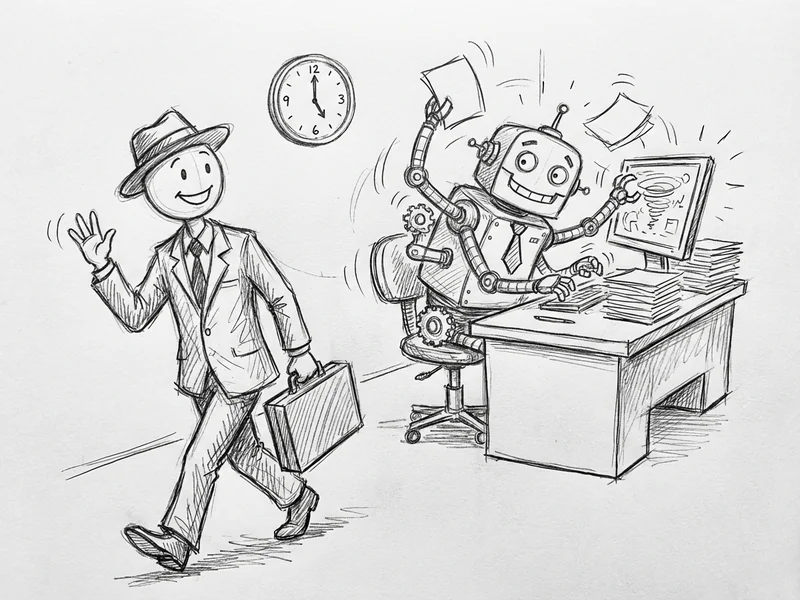
At the small business level, AI is augmenting workers, not replacing them. The receptionist who used to spend two hours on email follow-ups now spends 20 minutes. The owner who couldn't afford to hire a marketing person can now handle social media themselves.
The fear is understandable. But for businesses with 1-5 employees? The reality is AI makes existing people more effective. It doesn't eliminate the need for people.
The Local Angle: What I'm Seeing on the Central Coast
I've been having these conversations with SLO County business owners all year. Here's what stands out.
The early adopters have compounding advantages. Businesses that started using AI tools in 2023-2024 are now using them for everything. They've figured out what works. They're not experimenting anymore - they have established workflows.
The holdouts are feeling the pressure. When your competitor responds to leads in 10 minutes using AI-assisted drafts, and you take 2 hours, that gap shows up in your close rate.
The winners are using AI for boring work. Not the flashy stuff. The tedious stuff. Scheduling. Follow-up emails. First drafts of proposals. Data entry. The tasks nobody wanted to do anyway.
What This Means for 2026
57% of U.S. small businesses are now investing in AI technology. That number was 36% in 2023. Where does it go from here?
My prediction: the conversation shifts from "tools" to "workflows."
Right now, most small businesses use AI in isolated ways. ChatGPT for writing. Maybe a chatbot for customer service. Separate tools, separate logins, separate workflows.
In 2026, I expect to see more integration. AI that connects your email to your calendar to your CRM. Systems that handle entire processes, not just individual tasks. If you're curious about where this is headed, Google's agentic AI direction gives you a preview. And if you want to start connecting your tools now, automation platforms like Make and Zapier are the practical starting point.
The businesses that figure this out first will have another year of compounding advantage. The ones still asking "should I use AI?" will be even further behind.
The Bottom Line
2025 was the year AI went from optional to obvious.
Not because of any single breakthrough (though there were several - GPT-5, Claude Sonnet 4.5, OpenAI's agentic tools). But because enough small businesses adopted it that it stopped being remarkable.
The question isn't "should I use AI?" anymore. It's "which AI for which job?"
If you're still on the sidelines, you're not late - but you're running out of runway. Pick one tool. Use it for one task. See what happens.
And if you're already using AI but want to figure out how to get more from it - or how to connect all the pieces into something that actually saves you time - that's a conversation I'm happy to have.